Standing in line at the Bibliotheque Nationale (Richelieu), I was super excited. I love photography and this exhibition was perfect! I had been waiting for some time to see it and hadn't had the chance until last week.
We spent 3 hours in that exhibition. It was a pretty packed 3 hours, too. All the explanations and such were in French that I had to translate for the others. Yet, to be honest, I don't think any of them enjoyed it quite as much as I did, haha. It was interesting to see all the underlying issues of each photograph-- judging from just the image itself, some of the so-called controversies would not have been evident.
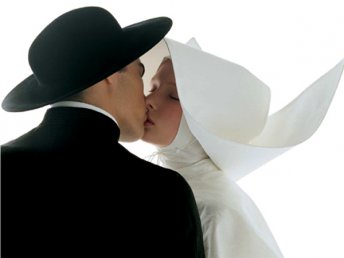
The medium of photography posed many problems itself. In some instances, such as the picture of "The Kiss at the Hotel de Ville", those who identified themselves in the pictures demanded compensation for the distribution of the artwork-- something that would have been highly unlikely to happen in the field of painting or sculpture. A photograph captures the exact image of a given person at a certain moment in time, during a particular circumstance in life. It was the first medium to have achieved that, and indeed, even film is comprised of millions of frames of photographs consecutively portrayed to produce a moving image.
Photography has, for this reason, become so crucial in documenting history, as well. However, the pictures of Stalin with his comrade pre/post the latter's execution during The Purge also give evidence to the fact that even photography cannot escape the technical manipulations of man to achieve his own desires and purposes. Even something meant to depict "Truth" never is used solely for that one purpose. "Truth" varies. "Truth" is subjective. "Truth" can always be rewritten, like history.
In photographs like those of Cindy Sherman or Robert Mapptlethorpe, what is given as truth is not necessarily the truth. They are images taken of men and women dressed up in a role, a role either accepted, rejected, perpetuated, or abhorred by society-- yet, a role we all recognize and that we all perceive in different ways. The graphic images generating the oft-discussed line distinguishing art and pornography only push the subject further precisely because of its contentious nature of the medium of photography, a medium that renders such verisimilitude to the content depicted. Would such a polemic be resurrected as often had these same subject matters been portrayed in a painting? With as much verisimilitude as possible? I would argue surely not, for the reason that the object of art is a painting; painting is known to be an expressive medium, a form of art and portrayal with the intention of being merely a portrayal and an attempt at verisimilitude. Photography, on the other hand, is not. Because of photography's perception as the documenter of reality, of "truth", viewers come to associate the medium and its subjects with the society surrounding it. They start to worry about the implications and ramifications of images like those of Mapplethorpe's or Toscani's. Previously, painting had encountered these debates but not to this extent. This extent would not have been possible because the realization of such "true" images had not existed before.
This discussion of documenter vs. art vs. obscenity has carried over into many different realms of photography, namely that of publicity. Photography has become one of the most crucial elements of marketing-- it could perhaps be said that it remains the most crucial (even with the rise of computer graphics). In that sense, with all the lines blurred as to what photography as the flexible medium can do, what is really the boundary separating photography as publicity and photography as art? Good publicity, good advertisements, take advantage of good photography. Good photography implies that photography is something to be mastered, like an art. Thus, even in publicity, photography retains that artistic aspect. Then, why does it become so controversial when photographers like Toscani use their art for publicity purposes?
As some say, publicity is meant to sell a product, not to promote a cause. For his United Colors of Benetton campaign beginning in the 80's until 2000, Toscani attempted to do both. However, his art centered on controversial issues, portraying social stigmas, unrest, inequities, subjects-- all of which became the sole form of advertising for the company. His campaigns showing child soldiers, HIV patients, peaceful interactions between races raised many concerns and outrage against the brand and its photographer. Many argued that it was debasement of human strife, a commodification of suffering in order to promote the consumption of a good, a capitalistic venture preying on the social needs of others. Yet, is it really? These photographs are branded with the label name of "The United Colors of Benetton", but upon removing that green logo, it becomes just another photograph, another work of art. And isn't art also something meant to sell itself? Then, any content found in art in this capitalist, profit-seeking, money-dependent world can be considered to be a commodification of issues, of struggle, of strife, of happiness, of society, of humans.
Moreover, the inclusion of these photographs in Benetton advertisements cannot necessarily be seen as an intent to promote the consumption of the brand itself. To launch such a campaign is to take upon a great risk-- the risk of backlash, negative reception, decreasing sales-- a fate that the Benetton campaign did incur and perhaps to which the company's now slow decline and little-known fame can be attributed. If not through this way, would others have encountered such issues? While communication studies show that chance encounters cannot ensure retention in the receivers' minds, continual exposure does lead to some recognition of a subject at hand. Though much discussion was indeed centered on the campaign itself and not on the issues presented in the photographs, it cannot be denied that in debating and refuting such images, the content did matter-- it was exactly because of the content provided that such a polemic arose. In discussing this campaign, one had to absolutely refer to why the campaign deserved such reprimands-- because it portrayed the dying, the suffering, the unhappy. That in itself allows people to see and talk more about the controversial social subjects more than they would in their daily lives.
The campaign move its audience in every way-- repulsion, pity, disgust, shock, awe, confusion. These photographs do what they are meant to do-- generate discussion. Granted, the discussion of these specific social issues can be considered dim in comparison to discussion of the campaign venture, but they are a discussion nonetheless. People can refuse to buy the product out of protest of the use of the image, but they cannot erase the image from their minds. Bad publicity, good photography. Correction: bad publicity for the company yet good publicity for the issue. All products of good art.
As long as art remains the center of all publicity, then publicity has free reign to use what photography offers to its ends. Everyone does it in every field-- we all take advantage of what we can to achieve a certain purpose, to convey a certain message. In a capitalist society, anything is game. I can see both sides to the issue; even now, I'm still not completely certain on my stance in regard to this issue. However, it is evident that I am not against such a campaign. Publicity is meant to promote a product; yet so is photography, so is art-- the two are one and the same and they are meant to promote the product-- ie the expressions/desires-- of their producer-- the photographer/artist. If the art of the visual and personal must be welded with another form of art-- the art of persuasion and survival, a most natural trait of humanity-- then it may as well force people to talk-- about anything. Humans, it appears, are veering toward this tendency to remain passive, to remain apathetic, to discuss less. Talk may just be talk, but a lot of thinking can come from talking, and a lot of changing can come from both.


No comments:
Post a Comment