Saturday, November 21, 2009

Wish upon a falling star

On November 17 at around 4AM, I witnessed a meteor shower for the first time. Every November, the Leonid Meteor Shower occurs, scattering hundreds of stars among the skies for eager, waiting eyes to see. At 3:30AM, my friends and I bundled ourselves up with layers of clothes to combat the cold and trekked over to the Arb to lie down on the grassy fields and stare up at the skies, waiting in anticipation for the streaks of fire that would burn across the ashen sky.

As the ten of us sprawled on the grass and listened to music streaming from a friend's iPod Touch, I lay in silence, looking up at the sky sprinkled with constellations that I typically can never see nor notice, and that, I am sure, most people can never see nor notice. It's funny that stars are constantly surrounding us and they are consistently present in our lives, without fail, due to the sciences of nature and the solar system, yet a lot of us hardly realize or recognize these brightly shining spots in our lives.

Art is not always considered to be things of beauty, especially with the realization that beauty is in the eye of the beholder, but after seeing these blazing balls of flame tearing across the night sky, it made me wonder if the one thing that is always beautiful would be nature. People can vary on their views of physical beauty, of "artistic beauty", but I feel that it is cultural-wide, this notion of nature as beauty. Maybe the one thing that is always beautiful in our eyes is that which we can never escape. Nature always encompasses us, our small human selves, in this great expanse of the world, and whenever we are approached by the awesomeness of the natural, we encounter the sublime and we tremble and we are affected by something so intangible and inexpressible, but something we recognize to be beautiful.

Indeed, that early, dark morning, with the entire, never-ending skyline looming above us as we lay, each linked to the other in testament to our friendship and the closeness of our emotional ties with each other, as we 'oohed and ahhed' over the various constellations and the fast-moving snippets of meteors entering our atmosphere, I was yet again struck by the beauty of it all. The beauty of the stars, the sky, the trees, the grass, but perhaps most importantly, I was struck by the beauty of the mere moment. This precious hour when people who love each other and enjoy each other's companies gather together to partake in a moment that is once-in-a-lifetime and so breathtakingly beautiful. Maybe it will happen again next year, maybe not. But this year, it happened, and painted such an amazing picture in my memory, one that I am sure to never forget.

-----

Taken from Arts, Ink

Thursday, October 22, 2009

Nothing more, nothing less.

We get so caught up in our own lives, in the events that pass us by, in the people who surround us. We become so focused on our work, the latest trends, the current affairs. We lose sight of so many important things, the ones unseen, the scenery that remains constant even as we move incessantly. We forget to appreciate the quiet. We forget to truly look and reflect-- about ourselves, about the world, about life, in general. We forget too easily that it's not all about the grades or the money or the reputation. It's always about something more than that, some unspeakable greatness that is found in the smallest of things.


This video is just another reminder of how greatness surrounds us every day. How can something so simple, like fish in an aquarium be so astounding? This is what they mean by the Sublime in History of Art-- a scene that reminds us of just how small we are. And indeed, as onlookers are deeply silhouetted by the blue green of the water tank, we are forced yet again to acknowledge how small we are. In comparison to the vastness of the sea, the millions and billions of fish and other species in the world, we are but a mere 6 billion humans.

Because we are human, oftentimes, I think we forget that we are just humans. We have the capacity to think, to feel, to plan, to act, to judge. So, we think we are so great, so immortal and invincible. We believe we are the most intelligent beings, we believe we are right, we believe no one else could possibly know better than us. We feel we have the right to control everything, to hold power over others. But when it finally hits us that we are nothing more than human, the word than connotes a meaning much less than "powerful". It strikes us that yes, we are humans...and nothing more, nothing less. Nothing more, nothing less.

Under the comment section on Youtube, there was one who criticized this video and those who considered it to be beautiful:

"Horrible. It's never that crowded in the open sea. Poor animals. And all that only because they want to hear us humans saying things like you are here on youtube.

This is not beautiful, it is brutal."

This comment does bring up a plethora of questions, one of which asks, "What is beauty?" and the other which asks, "Can something be morally deranged and artistic at the same time?" This commentator seems to imply that because the entrapment and display of natural beings is a brutal practice, this scene cannot be considered "beautiful". That its artistic value is lost because it is tainted by some idea of right or wrong. Alas, beauty is in the eye of the beholder, is it not? Something that is brutal to one person has every capacity to be considered beautiful to another. Not to sound completely void of morality, but this seems to be fact. Photographs and paintings depicting the havoc wreaked by war are still considered to be art, to retain its sense of creative expression, even if they are portraying or were created in deplorable circumstances. Art, I don't believe, is necessarily bound by a humanistic sense of ethics; in fact, art is precisely that which cannot be defined or contained by human understanding-- artists will say that they do not create for the purpose of profit but that they create because they are driven by this innate drive to express something they cannot label or comprehend.

However, I'm really glad that this person showed us the other perspective of a scene many would call breathtaking and magnificent. There are so many sides to art, so many ways that it influences us daily and we do not even take notice of it. Art does a lot to move the public, yet we have become so interested in technology, the sciences of movement-- faster, stronger, better-- we have become blind to the art that surrounds us each day.

This video holds a lot of appeal for viewers because we become immersed in the scene. We become surrounded by the water that holds the sharks and the fish, we are enveloped by this sense of calm and tranquility, struck by awe and amazement at the beauty that faces us. We are just another human being in the aquarium, drinking in the magnificence that slows everything down. It's like we're in water-- we feel loose and at ease, we feel slowed down but not in a cumbersome way. And as we watch, mesmerized, it hits us that, wow... there's so much more out there than we fully appreciate or realize.

-----

Taken from Arts, Ink

Monday, August 24, 2009

Freaking Pride!

For me, guarding my heart means that I become cynical. Or, more precisely, that I act cynical. But in the process of acting, a lot of times, I become cynical. Not literally cynical, but…emotionally cynical. My guarded heart becomes just another horrible cheesy cliché about hardened, protective hearts that can't open up or let go or let others in. It continues the process of blocking others out, of keeping my thoughts and true emotions in, of shaking it of any … any possibilities of hurt, sadness, betrayal, pain, suffering. I just don't trust people.

I've come to the solid realization that I am just way too damn proud and insecure. How paradoxical. And by "solid realization", I mean that it's something I want to fix; I actually want to do something about it.

Shall I explain?

I'm proud because I'm insecure. I won't show my true emotions because I'm afraid of being judged. I don't admit or point out my flaws because I am afraid that they will be things that whoever I'm with won't handle-- that they will drive them away. I am afraid that someone won't love me if they knew just how fucked up I am. So to keep them, I keep up appearances. I don't like to lose, I don't like to seem weak, so I continually act and pretend in ways that establish my superiority and strength. That's why I won't admit I miss someone, that I would like them to visit, that I do want to see them, that I'm mad they won't come see me, that I'm frustrated that they won't spend time with me. It's why I won't admit that I'm mad, either, because I'm afraid that being mad over a thing like that will make me seem too clingy and needy, too hotheaded, temperamental. That I will seem like such a small person.

And then I use my own wrongful actions as excuses for why I can't or won' t open up to them: "Oh, if I can't even talk to them about something like this, how can I approach them about deeper issues?" in addition to the fact that I just am too afraid to open up because I'm still afraid of judgment. And I don't want pity and I don't need solutions. Sometimes, I just want an ear to listen to me and a ready shoulder to lean on and someone to wipe away my tears. I want someone who will not judge. I want to know that I can trust them to be open-minded, that they will still love and respect me even after knowing all of my faults.

This is most likely why I continually felt (and to some degree, still do feel) so inferior to and disrespected by certain people. Perhaps due to my own insecurities or their projected personal opinions concerning our respective majors, I felt that they did not respect me as an intelligent person of worth. No matter what they said, no matter how much they praised me (seemingly patronizingly), I couldn't shake off this feeling that they did not mean it. I think I let it consume me too much because, like Ruth said, anger is a lot easier to handle than hurt.

Now, I want to change. I want to/need to stop being this person. Granted, it is good to be cautious, to make sure my heart doesn't fly too far away, that my hopes don't outrun me, but…it is also good to learn how to be more human, more humble, more accepted, more accepting, more risky. I need to learn how to risk my heart, to endure hurt, in order to grow. Jesus came down for us and he held nothing back. If we're supposed to live our lives like him, then it makes sense for me to learn how to let go. I need to let go of my pride, my selfishness, my self-centeredness, my insecurities. Because sometimes it's hell, to live like this.

If I'm going to be in a relationship, I might as well give it all I've got. I wasn't always this lazy person who half-asses things. Typically, I give it all I've got. Why shouldn't I do the same, especially for relationships? Romantic and otherwise. God knows it's going to be hard to bite down and just reveal all of my atrocities to the world, but how else am I going to break down my stubborn spirit?

Friday, August 14, 2009

What I want:

I know you don't tell me things I don't already know, but I wish you told me things that I want to hear. For once.

Thursday, July 16, 2009

The majority is not always right.

As humans, we have the tendency to follow the actions of others. Whether those actions are good or bad, right or wrong, naturally, we begin to assume that whatever most of the people are doing is what we ourselves should be doing as well. While this clearly has negative effects, it could be said that it possesses positive ones, as well, especially in those cases where the majority is doing right and good. However, this instinct to follow the many, more often than not, leads to the loss of critical thinking and judgment. We no longer know for certain why we do that which we do, for what reasons, what purposes, if this or that is truly what we believe or want to do, or whether our actions and beliefs are defined only by the desire and burden to follow the majority, rather than our own personal beliefs.

In church, it's so easy to get caught up in the majority. After all, if everyone else is doing it and saying it's God's Will, how can anyone else say otherwise? It must be right, it must be true; this must be what I'm meant to do, what I'm supposed to do; this must be how I'm supposed to be, how I'm supposed to feel; I must do this regardless because they say it is written, they say it's God's desire; it's in the Scripture, how could it be wrong?, they know what they're talking about, I don't; I should strive for that spiritual level; I should enact all these applications to my life to be just like them, to serve God, to be like this or that, to feel like that or this, to want something or another, to hunger like him or her, to serve like that person or this person, etc etc etc etc etc etc etc etc etc etc etc!

Is this right? How do we know?

The thing with that is that we never know. One person will always say one thing, another will say another, the next a new thing; it's the same with churches. Churches, as much as they're meant to be holy, are just as unholy and flawed as any other institution because they are run and maintained by people-- people, yes, who (hopefully) have good intentions and mean better, but who are, nonetheless, mere mortals so flawed and tainted by a myriad of things. There is always a majority of the people who do things and say things and believe things one way, and as a member, many times, we feel the obligation moreso than the desire to do and say and believe and be just like them.

But why? Is it because we truly believe that is how life should be led, how we should serve, what we should believe? Or is it because we are told that that is how we should be? And if the answer is the former, then can we say for certain that it wasn't influenced by the latter? Just how much do we reflect on the reasons for which we are a certain way and the purposes behind which we do certain things? How often do we truly believe in our hearts that the majority way is our way? Or do we fool and guilt ourselves into thinking it because that is all we have ever learned or known? Because we feel sacrilegious or un-Christian or ungodly to even imagine doing something different? And if the last is so, then why do we feel this way? Is it a perpetuation of that natural human desire to stay with the majority? Is it due to our exposure to a certain culture, a way of life and thinking? Is it because we feel compelled to believe that the church is always right and we must always be led by it?

Why are we so afraid to be independent? True, independence and 'rebellion' have become, as of late, a trend in our society-- this desire to be different, the want to be unique, the fad to go against the grain, etc. Nevertheless, apart from all that, in solely a personal and religious context... Why are we always compelled to believe that there is only one way to go about things? How come we are so afraid to call out and disagree? And when we feel differently, why do we subsequently feel ashamed? Are we brought up to believe that disagreeing with the church is heresy? Perhaps.

We fail, a lot of times, to realize that being of the same religion does not necessitate being of the same opinions. We as Christians hold the same core of beliefs and the same goals but that does not mean that there will not be differences. In the end, only God knows, so for the moment, it would be nice if everyone stopped pushing their own dogmas and beliefs as the only truth, the only way, blah blah blah. And if we're different, so what? Who among us will dare to say that we are more Christian than another? More faithful, more holy, more touched by God? Who among us has the right to say that? No one.

Therefore, if you're different, go you. Don't be afraid to be who God made you to be.

And don't ever forget that the majority is not always right.

Wednesday, July 1, 2009

MJ

Michael Jackson died nearly a week ago and everyone still keeps talking about him. Why is there so much hubbub surrounding the death of this man? Yes, he was the King of Pop, yes, he was a celebrity, yes, he was a controversial international figure. But he was also just a man.

Thousands of people die everyday and do we even turn our head to even acknowledge their deaths? Do we pay this much attention to the old man across the street who dies from old age? Or the 12-year old girl who passes away in her hospital bed after 5 years of chemotherapy and countless surgeries?

No.

So, why him? Why any of these celebrities? Yes, they had fame, they had money, they had issues of their own--yet, minus the first (because even un-famous people have money), they're just people. Ordinary people who deserve some respect and privacy, even or perhaps especially, in death.

By wondering about these conspiracies, by trying to analyze their method of death, their intent-- maybe it was poison, or perhaps suicide, maybe it was malnutrition, etc etc-- who are we trying to satisfy? Are we seeking justice for the dead or just more fodder for our daily gossip? Who CARES that he never adopted his children, that he paid the surrogate mother, that he included or did not include certain people in his will, etc etc etc???

It sickens me that we, as a society, become so interested in a person only when that person holds some infamy (not even just fame, but infamy), when they hold some kind of perverse appeal to us. We don't ever move our focus to much more important, more deep issues, more people in need of aid and saving-- not unless it becomes a trend, the latest fashion in a tidal wave of "do good, feel good" campaigns. Unless it's celebritized, advertised, mediatized. Unless we make it into the latest form of start gossip.

It's no wonder that nonprofit organizations have such a hard time getting their concerns out, reaching out to the masses of people. When the masses refuse to even hear the tinkling of a bell unless it means some juicy gossip or some cheap thrills they can live vicariously through in their otherwise mundane lives, it's hard to connect the greater issues and causes to humankind. Simply put, they just don't care. Critics fault campaigns like the ones run by Benetton or Product (RED), but if commodifying the social matter is the only way to get across the poignant message in this capitalized, superficialized, and polemicized society, then why wouldn't these organizations turn their vigilant human rights endeavors into corporate, entrepreneurial efforts?

There is no denying that Michael Jackson was a legend. He still is, because his music surpasses even his mortal life. He died. His family, estranged or not, legally adopted or not, in his will or not, is most likely grieving a loss. His fans are grieving a loss. He was big-- national-- global. But he was still just a man. Who said death was the great equalizer? Throughout history, we have seen countless differences in the way society treats the deceased based on their ethnicities, socioeconomic statuses, genders, ages, etc. In the 21st century, this new millenium, death is as equal as it ever was. That is to say, not at all.

Sunday, June 28, 2009

Idiot.

I was an idiot to have thought that anything had changed.

I'm still waiting on my 1 John 5:14, God.

Veux- tu dire que ce que je te demande n'est pas à ton désir? Qu'est-ce que c'est que tu désire? Plusieurs fois, sans arret, je te dis les mêmes choses, je te crie les mêmes mots de douleur, et...tu me donnes quoi? Rien? Non...j'attends toujours ton miracle, j'attends toujours ta promesse jusqu'au bout...même si je meurs sans l'avoir vu.

Deception.

God will change it,

or so they say.

It seems as if we’ve been waiting

forever

and

no change

has come to pass, no difference

is visible.

And the scars– Oh! the scars…

They still remain as bloody wounds,

the salt from the tears stinging

these long,

deep

stretches

of heartache

and sorrow

clear

across our chests– visible

only to those who look very closely, so very closely.

Only to those who know enough to see.

That is to say, no one.

Au moment où on pense que tout a changé, on se rend compte que rien n’a changé.

Sunday, June 14, 2009

All grown up?

On Friday, I had lunch with Mie and Soo. Of course, I was a bit dubious of the conversation; as much as the married woman and I had easily conversed in the past, what if it would be awkward because of the time passed? I dread those silences. But with Soo, and just naturally, the conversation flowed easily and I found myself enjoying their company.

We talked about various things: Mie's trip to Japan, her difficulty in obtaining a visa, her brief 10-day journey to Thailand with her husband's MBA class, our numerous excursions, classes, interesting stories. It is interesting to note that even with the age gap, the difference in life experiences, and some cultural barriers, Mie still treated us, these barely 20-year old college students, as her equals. The test came, when I decided to ask her about her future marriage plans. Fairly recently married, would the just retired, jet-setting, once successful investment banker now in her 40's try to have children? Surprisingly, Mie answered with ease. "Yes," she responded, "We are trying". And we began to discuss the various options, talking about marriage and children in general.

In the midst of the conversation, in the back of my mind, I found myself marveling at this rarity: 2 college students discussing the aspects of married life with such a mature, amazing woman. The fact that she was so open and willing to talk about such topics was a testament to her level of respect for us. It made me wonder: Is this what it feels like to be an adult? Does this mean that I have "grown up"? What happened to the days when talking about sex was taboo, when talking to those older than us entailed solely politesse, when we considered even boys to be full of cooties? Now we've reached the age where sex is normal-- thought to be healthy and good, even, where age doesn't matter as much in friendships, where we seek opposite sex companionship. What is the sign of being "grown up"? When do we know that we have reached that point? Sure, we can grow old, but some of us never "grow up"-- and is that a bad thing? A good thing? I guess it would depend on what how someone defines "growing up".

I remember having the desire to never grow up, to never become an adult. Others around me wanted to so desperately turn 16, to turn 18, to turn 21, but I asked myself, "Why? Why would they want to be grown up?" Even at a young age, I knew. I knew that being a grown up wasn't going to be fun, liberating; it was going to be hard, full of responsibilities, rife with strife. I didn't want to grow up. Even still...I don't want to grow up. I joke that I have the mentality of a 5 year old half the time, but what is it about growing up that is so bad?

It is true: growing up is hard. Change, in any form, at any age, is hard. But that doesn't necessarily mean that it will be bad. Maybe the fear I had (and still have) about growing up is that...it means I've lost pleasure in the simple things. That I have only greater and more stressful life decisions to look forward to, that I will face increasing pressures and burdens, that I will grow old, without having enjoyed life. That I will become bogged down with the fears and expectations that come with being old. Yet, as I encountered that rainy Friday afternoon, over a meal of typical French brasserie food, growing up isn't always a bad thing. Earning the respect of others, enjoying the liberty to discuss previously forbidden topics, laughing over and earnestly discussing future options and plans-- with the entire realm of possibility open to us--no, being grown up isn't a bad thing.

Perhaps the important thing to learn as we grow up is that while we must grow out of our childishness, we must never grow out of our childlikeness. There's nothing wrong with snorting water out of our noses as we laugh over horrible math skills right after intensely discussing the merits of methods of conception. Or carrying around beaded purses in the shape of a cartoon pig's face while wearing gold Rolexes. Nothing at all. It merely means that one has grown up well.

Monday, June 1, 2009

Second thoughts...

I now only have three weeks remaining of what is to be a five month sojourn in France. With all the disappointment and the complaining I have done, it still must be said that I did quite enjoy my time in this country (it would be more appropriate to say "city" as I have for the most part only remained in Paris).

Yet, as the prospect of my return home looms ever closer, I begin to have second thoughts about leaving this City of Lights and Really Expensive Things. Thinking about it the other day, I realized what it would be like to have an actual cellphone again. A phone that is up-to-date, complete with contacts that I appreciate and call on a regular basis. Complete with a camera. A sliding phone. A shiny, LG Black Cherry Chocolate phone. And it struck me: It is so bizarre. It seems of another world, honestly. To imagine myself plunging back into the way my life used to be back home...is very difficult to do.

I am trying to reflect on how my stay in Paris has influenced me as a person thus far. How the final three weeks will add to my experiences and my life changes. Have I changed? In what way? How do I come out of this once in a lifetime moment? How different have I become? The questions are endless but all retain the same meaning: How have I changed? Because it is for certain, that I have changed. However, to put it all into words is another matter. A difficult endeavor-- probably one that will not be well articulated.

Paris, first and foremost, has changed me spiritually. Though in this moment, I feel a bit distant from God, perhaps just from lack of church consistency or other factors, I can with certainty say that it was the only thing God could have provided in my life to pull me out from my spiritual slump of Fall semester. After encountering countless miracles and counting my infinite blessings that constantly fulfill my life, I would be less than a fool to say that prayer has no power. God has shown me again and again and has shouted quietly into my heart countless times that He does listen. No matter how hopeless my heart feels, He fills it with gladness and hope. He fills me with faith by showing me that He is always faithful. If at all nothing else, Paris has taught me that-- a lesson I consider to be most important and which I hold most dear in my heart.

Secondly, it has given me a new perspective about the city itself. Yes, I was disappointed; yes, that disappointment has not yet fully dissipated. Nonetheless, the fact remains that despite all of its shortcomings, Paris is still a gorgeous city, so enriched with cultured and enlivened with character. It is an international city, full of international people. However, it must be noted that even with its status as the number one tourist destination, even with all of the students flocking from various countries to partake in this great, historic city, colonial/imperialistic prejudices and mindsets have not been fully shed. As much as Parisians rub elbows and bump hips with people from all over the world, a large majority of them still retain a superior, colonial European mentality. While I am sure that (hopefully) it is changing, the large majority still have a very long way to go in terms of understanding the cultural differences and recognizing the individuality of each country represented in their city.

Thirdly, being in Paris has ironically underscored my own place in my circle of friends back home. Initially worried about being forgotten and left behind during my absence, the constant communication with my friends has reinforced the indisputable fact that I mean as much to my friends as they mean to me. This was a worry that I had struggled with for a large part of my life, as I am a person who often cares more about other people than they do about me; I had continually felt unappreciated and disappointed in the level of concern directed toward me, even when I knew that people are each different in how they experience and express emotions. Yet, as egotistical as this may sound, hearing my friends constantly mention how important I was to the intimacy of our circle, how they missed me, how they often wished that I had been there with them during periods of happiness and sadness, laughter and anger, may have shut that door of insecurity behind me permanently. That is not to say that I will never have such feelings again in the future; merely that those worries do not leaden my heart or preoccupy my mind as they did previously. How ironic that it took distance to establish this consciousness of closeness. It must be said: I adore my friends. I really do. They are my second family and without them, my world would be a whole less joyful. I firmly believe that we have a special bond that will endure for a very long time. Well...maybe I should pray about that, just in case. Haha.

These three points may sum up the most important changes I have undergone during my stay in Paris. The three points that I can articulate the best. The three that matter most. There are more, certainly, yet they are hard to pinpoint exactly, much less put into words.

Writing this, I am wondering about what will happen when I return. Being in France was and still is like living a dream. A dream where reality is so far away and a mere passing thought. Where I don't have to worry about the things going on in my family, where I don't have to face things and people I don't want to face, where I don't have to constantly prepare myself for a battle of emotions, where I don't have to armor my heart against harsh words, bitterness, resentment, sadness. Where I don't have to think about any of those things. Because they are so far away.

Everything is, without a doubt, better. God has changed a lot in my life and in my heart. But it is true that the same situations exist, the same worries, the same sense of uncertainty. I wonder if I will be strong enough to go back to it all. To have to face it everyday. Will I be able to disengage myself as easily as I used to? Will it be harder since I have fallen out of practice? Or maybe France isn't all that different from the States, where I had perfected the art of distancing myself. Or maybe I am not supposed to disengage myself but plunge myself into the depths of every sort of problem that I had stifled.

I am worried. I am scared. I don't want to...I don't know...I don't want to...I don't want to be uncomfortable. I don't want to suffer. I don't want to see others suffer. I don't want to have to be the rock. I don't want to have to have all these responsibilities. Which is to say that I don't want to grow up, I don't want to live life. Because life will always have discomfort, suffering, support, and responsibilities. And in order to live, we must learn to bear all of it and become better men/women at the end of each struggle. We must rely on God to show us the way and to pull us through.

Does this mean that I am not living while I am in Paris? Or maybe just that I am living a different life, in a different manner? I am not without the discomfort, suffering, support, or responsibilities here; yes, they may be less pronounced, less profound, less mind-blowing, heart-staggering...But they exist, nonetheless. Yet this life is a temporary life, and the other is my life-- what God has designated for me to take on, to change, to heal, to learn from and consequently to teach. It is what he has blessed me with. I'll go back. I want to go back. I am scared. But I want to go back.

Still, I do wish I had maybe an extra week in Paris with nothing to do but walk all around. And taste all the macaroons. Perhaps too much to ask for in the moment, but in the future, it will come.

Thursday, May 28, 2009

Friends


I love you guys. Love you love you love you love you love you love you LOVE YOU.

So. Blessed.

Wednesday, May 27, 2009

Controverses, Photographies à Histoires

[05.16.2009]

Standing in line at the Bibliotheque Nationale (Richelieu), I was super excited. I love photography and this exhibition was perfect! I had been waiting for some time to see it and hadn't had the chance until last week.

We spent 3 hours in that exhibition. It was a pretty packed 3 hours, too. All the explanations and such were in French that I had to translate for the others. Yet, to be honest, I don't think any of them enjoyed it quite as much as I did, haha. It was interesting to see all the underlying issues of each photograph-- judging from just the image itself, some of the so-called controversies would not have been evident.

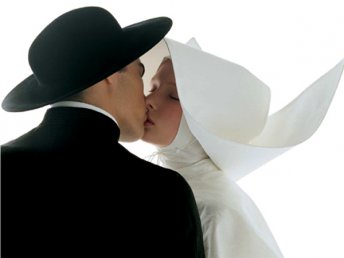
The medium of photography posed many problems itself. In some instances, such as the picture of "The Kiss at the Hotel de Ville", those who identified themselves in the pictures demanded compensation for the distribution of the artwork-- something that would have been highly unlikely to happen in the field of painting or sculpture. A photograph captures the exact image of a given person at a certain moment in time, during a particular circumstance in life. It was the first medium to have achieved that, and indeed, even film is comprised of millions of frames of photographs consecutively portrayed to produce a moving image.

Photography has, for this reason, become so crucial in documenting history, as well. However, the pictures of Stalin with his comrade pre/post the latter's execution during The Purge also give evidence to the fact that even photography cannot escape the technical manipulations of man to achieve his own desires and purposes. Even something meant to depict "Truth" never is used solely for that one purpose. "Truth" varies. "Truth" is subjective. "Truth" can always be rewritten, like history.

In photographs like those of Cindy Sherman or Robert Mapptlethorpe, what is given as truth is not necessarily the truth. They are images taken of men and women dressed up in a role, a role either accepted, rejected, perpetuated, or abhorred by society-- yet, a role we all recognize and that we all perceive in different ways. The graphic images generating the oft-discussed line distinguishing art and pornography only push the subject further precisely because of its contentious nature of the medium of photography, a medium that renders such verisimilitude to the content depicted. Would such a polemic be resurrected as often had these same subject matters been portrayed in a painting? With as much verisimilitude as possible? I would argue surely not, for the reason that the object of art is a painting; painting is known to be an expressive medium, a form of art and portrayal with the intention of being merely a portrayal and an attempt at verisimilitude. Photography, on the other hand, is not. Because of photography's perception as the documenter of reality, of "truth", viewers come to associate the medium and its subjects with the society surrounding it. They start to worry about the implications and ramifications of images like those of Mapplethorpe's or Toscani's. Previously, painting had encountered these debates but not to this extent. This extent would not have been possible because the realization of such "true" images had not existed before.

This discussion of documenter vs. art vs. obscenity has carried over into many different realms of photography, namely that of publicity. Photography has become one of the most crucial elements of marketing-- it could perhaps be said that it remains the most crucial (even with the rise of computer graphics). In that sense, with all the lines blurred as to what photography as the flexible medium can do, what is really the boundary separating photography as publicity and photography as art? Good publicity, good advertisements, take advantage of good photography. Good photography implies that photography is something to be mastered, like an art. Thus, even in publicity, photography retains that artistic aspect. Then, why does it become so controversial when photographers like Toscani use their art for publicity purposes?

As some say, publicity is meant to sell a product, not to promote a cause. For his United Colors of Benetton campaign beginning in the 80's until 2000, Toscani attempted to do both. However, his art centered on controversial issues, portraying social stigmas, unrest, inequities, subjects-- all of which became the sole form of advertising for the company. His campaigns showing child soldiers, HIV patients, peaceful interactions between races raised many concerns and outrage against the brand and its photographer. Many argued that it was debasement of human strife, a commodification of suffering in order to promote the consumption of a good, a capitalistic venture preying on the social needs of others. Yet, is it really? These photographs are branded with the label name of "The United Colors of Benetton", but upon removing that green logo, it becomes just another photograph, another work of art. And isn't art also something meant to sell itself? Then, any content found in art in this capitalist, profit-seeking, money-dependent world can be considered to be a commodification of issues, of struggle, of strife, of happiness, of society, of humans.

Moreover, the inclusion of these photographs in Benetton advertisements cannot necessarily be seen as an intent to promote the consumption of the brand itself. To launch such a campaign is to take upon a great risk-- the risk of backlash, negative reception, decreasing sales-- a fate that the Benetton campaign did incur and perhaps to which the company's now slow decline and little-known fame can be attributed. If not through this way, would others have encountered such issues? While communication studies show that chance encounters cannot ensure retention in the receivers' minds, continual exposure does lead to some recognition of a subject at hand. Though much discussion was indeed centered on the campaign itself and not on the issues presented in the photographs, it cannot be denied that in debating and refuting such images, the content did matter-- it was exactly because of the content provided that such a polemic arose. In discussing this campaign, one had to absolutely refer to why the campaign deserved such reprimands-- because it portrayed the dying, the suffering, the unhappy. That in itself allows people to see and talk more about the controversial social subjects more than they would in their daily lives.

The campaign move its audience in every way-- repulsion, pity, disgust, shock, awe, confusion. These photographs do what they are meant to do-- generate discussion. Granted, the discussion of these specific social issues can be considered dim in comparison to discussion of the campaign venture, but they are a discussion nonetheless. People can refuse to buy the product out of protest of the use of the image, but they cannot erase the image from their minds. Bad publicity, good photography. Correction: bad publicity for the company yet good publicity for the issue. All products of good art.

As long as art remains the center of all publicity, then publicity has free reign to use what photography offers to its ends. Everyone does it in every field-- we all take advantage of what we can to achieve a certain purpose, to convey a certain message. In a capitalist society, anything is game. I can see both sides to the issue; even now, I'm still not completely certain on my stance in regard to this issue. However, it is evident that I am not against such a campaign. Publicity is meant to promote a product; yet so is photography, so is art-- the two are one and the same and they are meant to promote the product-- ie the expressions/desires-- of their producer-- the photographer/artist. If the art of the visual and personal must be welded with another form of art-- the art of persuasion and survival, a most natural trait of humanity-- then it may as well force people to talk-- about anything. Humans, it appears, are veering toward this tendency to remain passive, to remain apathetic, to discuss less. Talk may just be talk, but a lot of thinking can come from talking, and a lot of changing can come from both.

Monday, May 25, 2009

Promises

"난 지킬 수 없는 약속은 하질않는다."

정말 그렇게 될 수 있을까? 인생은 언제나 모르는 것이다. 그렇다면, 차라리 아무 약속도하지 않는게 좋지않을까?

인간으로서 우리가 지킬수있는 약속은 뭐가있을까? 우린 약속이란걸 이해하기나 하나? 아님, 또 다른것들과 똑같이 이해한다고만 생각하는 것일까? 그 조금한 약속-- "어, 그래, 내가 5시에 꼭 거기 가있을게"-- 도 지키지 못하는 우리가, 그것보다 더 큰것들을 어떡해 이해해? 어떡해 지켜?

결혼도 마찬가지. 그것도 두사람끼리 맺은 깊은 약속이야. 하지만, 그건 어느 거미줄처럼 쉽게 흐트러지는 아무 의미없이 사라져버리는 그런 말만, 기억만 되잖아. 물론, 다 그런건 아니지-- 하기야, 모든 거미줄은 그런 운명에 빠지진 않찮아. 그래도, 너무 오랫동안 있을 수는 없잖아. 어느날엔...바람처럼 찰랑거리며 그 마지막 실도 끊어질거야.

그조금한 이메일도 못 보내는 인간, 그 한마디만도 얘기 못 하는 그 인간, 그 한순간만에도 얼굴을 볼 수 없는 그 인간, 우린 다 이런 인간들인데...무슨 약속을 지키겠다는 거야? 웃기시네.

나를 위해서 약속들을 지킬거야? Show me. 말만 하지말고, 핑계 대지말고, 네 행동으로 보여달란 말이야.

끝엔, 하나님밖에 없어. 약속을 항상, 끊임없이, 계속, 아무 조건없이 지키는 사람은, 우리 하늘에 있는 아빠밖에 없어. 하기야...그렇게 쉽게 모든 약속을 지킬 수 있으면, 하나님이 대단할 수는 없지.

하지만...이젠 네가 하는말을 믿을 수 없어...미안하지만...그렇게 됐어.

누구 얘기 하는걸까? 뭐...인간은 다 똑같지...

Tuesday, May 19, 2009

Tout ou rien du tout.

"Ma mere s'est mariee pour l'amour...et elle a pleure tous les jours". -- Gabrielle Chanel, Coco Avant Chanel

Lors de mariage...qu'est-ce qui est-on?

Friday, May 15, 2009

One day...

It won't matter anymore. Whether or not I'm waiting.

Saturday, May 2, 2009

The Love Language Test

37%- quality time

20%- physical touch

20%- words of affirmation

13%- acts of service

10% receiving gifts

Maybe it means nothing to you, but it means a whole damn lot to me.

Thursday, April 16, 2009

Perfect.

I may have been too harsh earlier when I had said that Paris was not for me. Let's be honest here, Paris really isn't for me; however, it is not as bad as I have portrayed it to be. Now that I have to time to kick back, relax, and actually discover this City of Lights and Romance and Fashion, etc, everything is starting to look a little brighter. It also helps that the weather is fantastically gorgeous this week.

I wonder what I've realized this past week...I've done a lot of walking. I've done a lot of talking. I've done a lot of staying silent and reveling in the happiness that seeps into every pore of my body. I've felt so happy that I wanted to cry.

On the top of Palais de Chaillot, overlooking the Eiffel Tower that I had not yet visited in over two months of my stay here, I felt this immense burst of giddiness and excitement in my chest. It was pretty much incomparable to anything else I have thus far encountered emotionally in Paris, apart from that reawakening on February 22. It was so gorgeous. Everything was perfect-- the weather, the amount of people, the view...It was so perfect. So perfect.

No matter what anyone may say about God, He never fails to astound. And just like that perfection I encountered whilst gazing over at La Tour Eiffel, He is perfect. Even moreso. I am so, so, so, so entirely blessed.

Tuesday, April 14, 2009

Life is hard when you've got only one to live.

A friend of a friend died yesterday. I was lying on my bed today as she checked her email on my laptop and when she spoke those three words, “My friend died”, I thought she was kidding. I scoffed, “Your friend died? What?” The next reply came with hitched breaths, “Yeah…she died yesterday”.

Her friend had found Christ after being diagnosed with her incurable illness. Comforting her, consoling her, I was once again struck with the realization about mortality: It is only when we are faced with mortality that we seek the Immortal, the Divine, the Everlasting, the Infinite. We never stop and reflect on these subjects at any other time than this because during all those other moments, we are busy either avoiding the subject or constantly chasing after our own immortality. Death is hard to confront. Not because we fear it or because it is unknown but perhaps simply because we don’t know how to approach it– precisely for the aforementioned reasons. We don’t know a thing about it and we are afraid of it, so why would we want to think about it?

This is why we have religion. Religion gives us the knowledge about this ambiguous end to our lives and it provides an avenue to relieve us of our fears by telling us that the end means paradise. It lends death such an easy to accept element, even with all the remaining questions and doubts. Religion, no matter what religion, is intended for the good of people and to alleviate the burdens of life caused by human iniquities, strife, sadness, despair– all the unpleasant experiences of life that make it so hard to live. It gives us a reason to live, tells us how to live it, and ultimately informs us of the end of living. Religious texts like the Bible, Koran, Torah, etc, are the playbooks and the gods are the coaches. We are the players and the game is life.

When someone dies, it’s hard. It’s shocking, surprising, devastating, disappointing, hurtful, unnerving, and incredibly sad. No matter what. We can expect it all we want, we can tell ourselves that the death was inevitable, that the end was reality, but when it really happens, when that person really does breathe their last breath and they are gone– that’s when we know that we never truly did believe they would die. We tell ourselves one thing but unknowingly believe the exact opposite. So, we cry. We sob despairingly, shedding tears from our hearts, breathing shaky breaths from our souls, holding on so hard to the ones we love and the ones who live. We become lost because now…we do not know what to do. They are gone and it is a strange feeling because even though not a whole lot has changed, there remains this dim emptiness that signifies a whole range of change. We keep wishing that it had not happened, that things had ended differently, we keep wanting them to be alive. And why wouldn’t we? We believe that living is so wonderful, because being with the ones we love and whom love us back, because breathing in fresh air and enjoying the smaller things is what is most important. We always want them to be alive. Even if we are Christian. And that’s okay, because that’s how we are, as humans. As humans, we always selfishly want those whom we love to be alive, even when it is better for them to leave us and be with God. It takes a long time to ease away that initial pain and to remember the eternal joy and happiness awaiting the deceased, but eventually, we become aware that all things are in order for it is God who has arranged them.

It seems that in instances like these, we are surprised to see that life is so short and uncertain, compelling us, even for a moment to wonder about the states of our own lives. We say to ourselves that maybe we should change this, be more like that, perhaps we should learn to be happier, to not take things for granted, to truly love while living and live while loving. It is a rare occasion to see someone truly turn their lives around after this self-reflection. What does it take for us to change our ways, when even death cannot deter us?

Moreover, how do we pray now? What do we pray for once the person we prayed for no longer exists? What lies there to do when one who is becomes one who was? My answer would be to continually pray for the one who was– that they would have a safe passage to heaven, that they would find paradise in the Kingdom of God. The ones who need prayer the most, however, are the ones left behind. The family, the friends, all those people who knew and loved the deceased. They will be the ones who will have a hard time coping with the sudden loss and they will be the ones whom God has to comfort and to watch over. Pray that they would find peace in their hearts and treasure their memories forever. Remind them that there will come a time when they will all meet again. Ask for a wonderful blessing to come of all this– that the living’s faith would grow stronger, that they would learn to love more, that they would count all of the gifts God has thus far bestowed unto them– that they would truly learn to not take life for granted.

Occasionally, we all need a reminder about the preciousness of life. Sadly, it is most often death that serves to remind us.

Saturday, March 28, 2009

Not meant to be

I'm just not meant to be Parisian. No matter what I'd like to believe, what I used to believe... It's just not in me.

Paris...is not that great. Paris is beautiful, certainly, but it is beautiful as any gilded surface is beautiful. Knock and it is clear that underneath the painted surface, there lies a broken, chipped surface. It reeks. Seriously. The people really don't wash over here, as I was appalled to smell out. There exists even to this day imperialistic prejudices and ignorance. It pisses the hell out of me everytime someone approaches me just because I'm Asian, when they follow me, trying to speak Japanese or Chinese to me. I just want to yell at them to just fuck off, or smile at them asininely as I ask with politesse en francais, "Oh, you speak Japanese? How nice. Me, I speak French" and just walk away. Everytime some weirdo approaches me in the bar and asks if I'm Japanese or Chinese, blah blah, it's like, sure it's flattering, but at the same time, are you just hitting on me because I'm Asian? What the fuck. And the men here. Ugh, what "men"? It's like they're still all stuck in the mentality of pubescent teenagers. Honestly, grown, 20-something men who have no idea what the fuck to do in male/female encounters, who just say shit and commit immense faux pas right and left-- this is where the world calls "The City of Love and Romance"? Where the men are supposed to be suave and sweep me off my feet? Yeah, right. They'd be hardpressed to even...I can't even think of an insult.

I'm just kind of disappointed. Perhaps I had high expectations, perhaps I just retain high standards after having seen plenty of different cities. But really, Seoul is way better. Give me a plane ticket to Seoul any day. I've had almost enough of Paris.

I just can't wait to go back home. Not home in the physical sense, but home in the emotional, mental sense. Home that means my family and my friends. Home that means goofing off till all hours of the night, talking about the stupidest things, cooking, baking, singing karaoke, dancing, studying, throwing snow, just...being with all of my friends. I never laughed so hard in Paris as I do each time I Skype with my second family of my friends. Maybe Paris would be better with them here. Yeah, it would. But I'd spend time with them in Ann Arbor, anyday. God, I miss them.

And I miss good food. It's amazing how much the French can fuck up Asian food. I'm afraid to even try. It's not ever worth the money; it's so expensive-- more so than any other kind of cuisine in France. Haha. I'm complaining because of food, but it's true. Food is important to me.

You know what? I miss hugging. Bisous, my ass. I don't want to rub faces with anyone but my boyfriend. Well, him and my friends and family, of course. But hugging...nobody does that in France. Maybe that's why I feel so stressed sometimes-- I don't release nearly enough endorphins in Paris because of a lack of hugging. A really good one from Brian sounds nice. Haha. But yeah...

I can't wait to go back. Which is so bad, you know? Because my family is practically breaking its back to send me on this trip and because of my self-centered, selfish unhappiness, I can't even enjoy my money's worth. Even if I weren't so disappointed, I don't have the time. Everyday, after school, I'm just exhausted. School ends so late that we can barely make it to any museums anyway. And to be honest, one can only go to so many museums for so long. On the weekends, I'm bogged down with work and reading that I never did during the week because a) there wasn't enough time, b) I was so tired, and c) they never give us our readings on time, anyway, so the weekend is the only time we can do it. I don't like going out on the weekends, either, because there are just so many damn tourists. That is one thing I can sympathize about with Parisians-- if there were constantly this many tourists everywhere I turned, I'd be damn pissed too-- heck, I already am.

Like I said...Paris is awesome. But I've seen better. And I have better. So why would I want to degrade?

Only three more months. Should I be sad or glad? To keep up appearances, I should look sad, but inside...I'd be jubilant. *sigh*

Tuesday, March 10, 2009

La relation longue distance.

Le probleme avec les relations longue distances est lorsque je ne parle pas beaucoup avec quelqu’un, je deviens irritable. Non…il m’ennuie. C’est a cause du fait que je suis vraiment enfantine and je prefere que l’autre me parle si disponible, lequel est completement idiot puisque je ne veux pas etre limite, moi-meme, par ce…ce…cette attente. Ah, bon…on n’est pas tout parfait. Pourtant, c’est pourquoi c’est tellement difficile. Apres ne pas avoir parle a quelqu’un, il devient plus difficile de se sentir a l’aise en parlant. Je ne comprends pas pourquoi je deviens si malcontente, parfois– ce n’est pas de tout une grande-chose et retrospectivement, je m’en fiche. Il se peut que j’ai l’impression d’avoir le droit au temps et a l’attention de cette personne– et ca, c’est vraiment egoiste et malveillant, deux de mes caracteristiques qui sont notorieux, mais seulement a moi-meme. Selon moi…c’est comment faire finir une relation. La manque de communication.

Lorsque je dis que je ferais finir une relation si l’autre n’a pas de temps pour moi, c’est la verite? Oui. Il n’y a pas de raison de rester dans une relation ou une personne ne peut pas etre present pour l’autre. Comment se rapprocheraient les deux? Bien, les deux ne sont pas d’un couple autant que deux amis qui s’aiment mais se rencontrent seulement parfois. Meme s’il ne concerne pas les relations amoureuses, c’est bien et rassurant de savoir que l’autre veut trouver le temps, qu’il pense les moments disponsibles a moi sont invalables. Ce n’est pas que je ne pense qu’ils ne le pensent pas…C’est seulement que, comme je suis le type de penser comme ca, je preferais qu’ils sont comme la, aussi. C’est la raison pour laquelle, quand il commence d’etre occupe ou quand il est preoccupe et il ne peut pas prendre le temps pour moi, je deviens ennuyee. Et si ca continue, je trouverai les moyennes de prolonger cette absence de communication, car j’aurai peur de recommencer la conversation, et comme ca, tout terminera.

Et c’est precisement pourquoi je n’aime pas de tout avoir la relation. N’importe quelle.

Monday, March 9, 2009

안해

Sunday’s service was different in that it was the first Korean church I’ve attended in a long, long time. I’m not used to the call and response method of prayer, nor the elaborate yet beautiful hymnal choir, nor the outfitted garments that signify the pastors. I’m not used to being surrounded by so many fobby Koreans, either (I mean, at least in Ann Arbor, they’re not so obviously Korean Korean…most of them). I was nervous and I wasn’t really awaiting any special message, to be honest.

Then the sermon started. The day’s subject was “부부”, “Le couple”, “The couple”, etc. The message revolved around Ephesians 5:22-33, verses that I disliked particularly for their sexist aspect. “Wive submit to your husbands as to the Lord. For the husband is the head of the wife as Christ is the head of the church, his body, of which he is the Savior. Now as the church submits to Christ, so also wives should submit to their husbands in everything” (Ephesians 5:22-24). “Submit”? Are you freaking kidding me? Why the hell should we submit to our husbands? Marriage is a two way street of respect and cooperation– woman shouldn’t “submit” to their husbands “in everything”– that’s just bull, regardless of whether or not it’s in the Bible. I don’t agree with that at all. I refuse to believe that’s what it means– there must be a mistranslation of that one word along the way that evolved in this patriarchal society to the use of “submit” for some other Hebrew word. However…The pastor went on.

He informed us that in Korean, the word for wife “아내” used to be translated as “안해”, which means “sun inside”. The woman brings light to the family; when she’s not happy, the family is not happy. 아내가 빛이지 않으면, 가정도 어둡다.

The role of leadership was designated to man from God (okay, still sexist -__-) and man needs that acknowledgement from woman, that respect, or he feels insecure in himself. 남자는 여자없이 아무것도 아니다. Man is nothing without woman. Woman should respect her husband and support him in his worldly endeavor to provide for his family because it is solely for them that he works endlessly. Even a kiss on the cheek every morning before he goes off to work can increase his productivity by 25% (ignore the fact that this implies the woman stays at home while the man works).

God tells man to love woman with all his heart, for He has given her to him (er, that makes us seem like objects in a different, more feminist reading of this text). Whereas women have only three lines of instruction, men have nine verses in how to be husbands. In this respect, perhaps the verses are not as sexist as they initially seemed.

Marriage is a mystical union between two people. God brought them together in a way that they could never be with any other person. They have a bond that transcends and supersedes any other form of attachments in this world. Together, the couple work together to better their lives as one entity under God. When this couple has a clear vision for their family that serves the purposes of God’s kingdom, the family cannot go wrong. So many internal familial struggles and troubles ensue from a lack of communication and cooperation between the spouses.

That got me thinking. I wish they could be here for this sermon. Do they know what it means to be a couple of God? Do they have a clear vision for the family? She supports him to no end, she (as best as she can under all the strain and pain she’s been through) respects him, she kisses him on the cheek as he leaves for work every morning. She is the light in the family, the carrier of happiness. She is everything God instructs her to be.

So that leaves the fault with him. He loves her. He does. In the childish way that he knows. But it’s not the way that God intends for man to love woman. It’s not agape, that selfless, all-sacrificing, all-giving love a husband gives to and feels for his wife. Does he have that capacity? What will it take for him to utilize it? For him to realize this agape for his wife? What is wrong with the family that it is so broken and so completely different from that family with a vision? The parents? The lack of communication, cooperation, the lack of love? The lack of …True, true agape? Is this fixable? Will this endure? For how long? How can it change? How can they make it change? One does not acquire the art of agape by themselves, on a fleeting desire, by chance. How can he learn? How and when will God teach him? Is it wrong to think that it’s his fault?

If a couple in a marriage don’t have that vision together, if they never experience that love, then it means that ils ne sont pas faits pour l’autre. Doesn’t that go against God’s decree, though? That all couples are joined by God for His plans? Won’t that justify divorce? If a couple, in the end, cannot endure the hardships that come to pass in their lifetime, does that not prove the point that they were never meant to be together in the first place? That their love may not have been real for they could not weather the storms together?

Love cannot … Many often say that love can survive anything, that it can get us through it all. But it can’t, in reality. Love won’t provide the money to feed our families, love won’t provide a job to support our children’s educations, love won’t find us a place to live in the cold, love won’t appease our parents’ protests at our marriage, love won’t end poverty, love won’t cure cancer, love won’t heal all the scars on our hearts. In order to survive in this world, in order to be happy…we need more than love, let’s be honest. We need those materialistic aspects, too… Love can’t do everything.

Or maybe that’s just human love. Because God’s love can do everything.

We can’t compare God’s love to our own…But if man is to love woman in the way Christ loves the church, then…Shouldn’t love between those in a relationship/marriage be able to do all these things, too?

Awesome Amazing...

OMG. I JUST GOT AN INVITATION TO MOON YOUNG HEE’S SHOW ON THURSDAY.

GOD IS AWESOME.

Thursday, March 5, 2009

L'amour ideal

For my conversation group on Wednesday, I have this elderly couple as my instructors. I have a couple because Jean is blind and his wife helps him in his daily activities. He’s been blind since he was 20 years old. Jean and Cecile (?) have been married for 40 years. FORTY YEARS. That’s nearly twice how long I’ve been alive. And they’re very much still in love. It’s in the little things– the hand on the knee, the pat on the shoulder, the soft brushing of hands…It’s enough to make me want…It’s romantic. Like most French couples.

What is it? What is it about France that turns the atmosphere so …romantic? And how does this couple manage to remain so much in love, even after four decades? People have so much trouble staying together, much less happy together, for even a few months, but Cecile and Jean…they’ve made it work for forty years. In a way, that astounds me. Not just because of the duration of their marriage and the fact that they’ve made it work so well, but because even after all these years…their love for one another is so visible, indeed, even palpable. For some reason, seeing them makes me…wistful? It’s not that…it’s not that I wish I had that. It’s that…well, maybe it’s that I wish that other couples had that. When I look into her eyes as she looks at her children, I can see the maternal love exuding from her dark amber eyes. When I see her look at him… I don’t even know what’s in that gaze.

It’s good to know. It’s good to know that that kind of love is achievable, albeit rare. It’s good to see and experience firsthand because I guess it gives me hope. Idealistically speaking, of course I’d want that kind of love for myself. That clear unconditional, no bars held, outpouring of such evident affection for another person. But ideals aren’t necessarily reality. And love isn’t necessarily unconditional…nor forever. As sad as it seems, as jaded and cynical as it seems, that is the reality. The ideal is an ideal because it can never be achieved. Sure, we can come very close to making the fantasy a reality but there will also lack something. Is this sad? No, I don’t think so. Because…Well maybe it just demonstrates that even though as humans we can strive to obtain this amour ideal…we can’t. And the sole person who can is God. So no one can love us and we cannot love each other as much as God does. Of course that deviates from the initial point and argument.

In truth, humans just don’t have that capacity. Mais non…I lied. We do. It’s just hard to find it. To find and exercise that capability. And it’s just too hard to admit it. Because admitting it is scary. Because then we are forced to …acknowledge something. Something that gives up, in a sense, our own sense of identity, our sense of freedom. Because then we admit that we may be able to become so attached to another person, that we are willingly giving ourselves up to the whims and follies of a human who could and undoubtedly will bring hurt upon us. That we would allow such a thing to happen. And when it does, we would have only ourselves to blame– after all, we wanted it in the first place, n’est-ce pas?

Monday, March 2, 2009

03.03.2009

Aujourd'hui, c'est l'anniversaire de ma mere. Je l'adore et je l'aime vraiment beaucoup beaucoup beaucoup. Mais, quand je lui pense...je me sens...Je me sens vraiment triste, parfois. Et mon coeur casse. Je souhaite que je puisse faire quelque chose, n'importe quelle, pour faire finir ses inquietudes, pour corriger toutes les mauvaises situations dans sa vie. Dans notre vie. Pour guerir les cicatrices sur son coeur brise. Quand je lui pense...Je me rends compte, chaque fois, que je ne peux faire aucune chose... Sauf prier. Sauf prier. Enfin, je crois que Dieu va changer tout. Puisqu'il nous aime. S'il y a quelqu'un qui devrait etre recompensee...c'est ma mere.

생일 축하해, 엄마. 그리고 사랑해. 정말, 정말...너무 많이. 그리고 고마워.
...For everything.

Bad Timing

Let's talk about timing. Bad timing. It's what I thought I had, not all throughout my life, but these past couple of years. Senior year summer is a prime example of bad timing. Then Freshman year. Then Sophomore year. Perhaps Sophomore year most of all. Over the last three years, it went from one boy to another to more to family to classes to God to family to boys to accidents to God to friends to family to God to Paris to family to Paris. It was an endless cycle of lamenting, "What the fuck, why the hell is this happening right now, God?!" Lol. These past few years could have been, really, clinical cases in the study of "When bad timing happens to (not-so) good people".

In retrospect...There couldn't have been better timing at all. Because it was all God's timing, all along. At Hillsong this past Sunday, the pastor mentioned that God doesn't require us to thank Him for everything but rather, in everything. In these moments of frustration, bitterness, sadness, loneliness, depression, I was struggling to thank Him both for everything and in everything. Personally, I believe that all things, good and bad, can be attributed to God because it all serves a greater purpose-- a reason lies behind each event that is unknown until the end. When it all makes sense. This past semester, I tried really hard and did see the good in the bad, but it was hard for me to grasp that it was okay to see the bad in the bad, too. Karen commented, "And there you go again, making it all seem like it's not a big deal. But it is." I don't know why I was, and still, so afraid to see the bad in the bad. Even with the accident, I kept having to reassure myself that I was still surrounded by such a great circle of friends who loved me and supported me to no end, that I should be so grateful that I could seize the moment to depend on them. I didn't want to, God knows that, but I was forced to. So maybe I could thank Him for that. And in it. But my heart...was completely elsewhere. As it was in most of the scenarios last semester when it just seemed so hopeless and I felt so utterly powerless to control anything-- and I am a person who secretly has a compulsion to control everything. If I were to admit that my life were anything but this beautiful masterpiece...Then that would be acknowledging something very similar to my own failure. In what, I don't know. But the thought of surrender was unbearable.

Fast forward many months later and here I see how every single step fell into place to bring me where I am today. Sure, I certainly don't have all of the answers, but I have the peace of mind and unburdened heart to see things in a better light. To step away from the seemingly meaningless and haphazardly placed blobs of paint to admire the way they all come together to form this beautiful Impressionist painting. To see the forest for I'm no longer in the trees. To see how God brings everything together, so perfectly, so wonderfully, so faithfully. In this past month alone, I have experienced countless miracles and answered prayers. I, who once never failed to pray prior to last semester in dire situations, turned away from reaching out to Him when I needed Him most because even though I knew, even though it was embedded in my heart and mind that He listens and He delivers...I just couldn't...I couldn't feel it. And I couldn't bring myself to continue something that I simultaneously knew to be effective yet felt was ineffectual. And still...He is faithful. If I ever had any doubts that God does not listen, that He does not answer prayers...I would be the biggest idiot of all time. Because after experiencing and seeing all of this joy, all of his magnificence, I would be...well, pretty damn stupid. Not only blind, deaf, and mute, but just...IQ of negative 023948309284. And I wouldn't deserve this awesome life He has bestowed upon me.

On February 21, as I stood there in front of Cabanel's "Naissance de Venus" and my mind rushed forward in time and space to compare it to Manet's "Olympe"...it just clicked. And it came back again. That recognition, that realization, that desire to search, to strive for understanding, to...just...know. And really, truly want to know as opposed to wanting to want to know. It was as if something completely missing from my heart had just fallen back into its proper place. Like a candle blown out was lit up once again. It's kind of like how I feel about God right now.

I'm not the best student. I procrastinate a ton, I don't do my work, I downright bullshit (and quite beautifully, at that) my way through school. I'm not the "best Christian", either. And according to some people's sense of that term, I never will be. To be honest, I don't really have that desire to be-- to conform myself to the ideals of that "perfect Christian" possessed by others. What is most important to me is not how I will be judged by others but how I will be judged not only by myself, but God. As Soo says, faith is between that person and God. No one else can determine who has more or less faith, who is doing more or less works for God; no one can pinpoint one's determinations and motivations in their spiritual lives. It's easier with schoolwork. We get a grade. But that grade is an improper measure of effort, of intellect. It's a letter or number designated by someone else marking down their opinion of our knowledge and work. Only God knows. I like that idea. In the end, what matters is that I believe and I know the truth. As much as I debate certain technicalities, as much as I pose all these doubts, fears, and questions about my faith, when it comes down to it, I have it. I believe. And I'll never again think that God doesn't listen, that He doesn't care, that He doesn't answer prayers. Because He does. Even when we don't have the heart to ask. Or maybe...especially then.

Saturday, February 21, 2009

02.19.09

Matthew 7:7-8 Ask and it will be given to you; seek and you will find; knock and the door will be opened to you. For everyone who asks receives, he who seeks finds, and to him who knocks the door will be opened.

1 John 5:14-15 For this is the confidence we have in approaching God: that if we ask anything according to His will, He hears us. And if we know that He hears us-- whatever we ask-- we know that we have what we asked of Him.

It is God's will that my sister be a doctor. She will be such an amazing one, at that. I am so incredibly proud of her and I thank God for showing her the extent to which He has blessed her not only with her intelligence and perseverance, but with His undeniable and visible love for her so that she, too, may be able to see just how wonderful she is. I love her so much.

Praise God.